Parthénon is a UX/UI design project exploring how artificial intelligence can enrich cultural mediation in museums. The project is based on the creation of interactive kiosks, installed near the artworks, allowing visitors to better understand, interpret, and experience history through an immersive experience. The project was carried out as part of a workshop in Bachelor 3 Web Designer, with the aim of proposing an innovative response to real issues of cultural accessibility and audience engagement.
Project overview
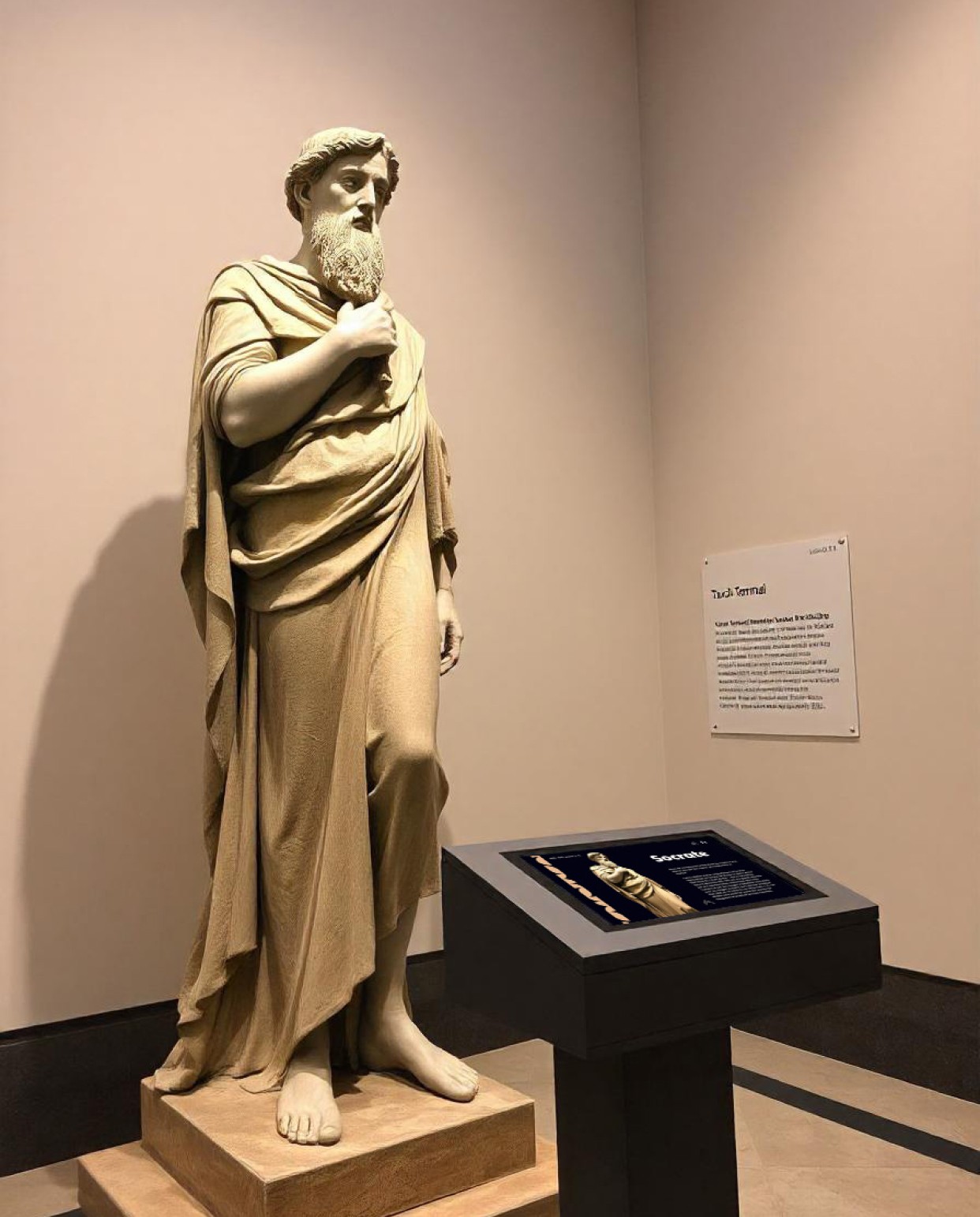
Parthenon consists of designing a phygital experience combining digital interface, artificial intelligence, and historical heritage. The kiosks present the works exhibited on screen and use AI to animate, contextualize, and enrich their interpretation.
The goal is to transform a static work into an interactive experience, capable of adapting to different visitor profiles. Through animations, stories, complementary content, and cultural suggestions, Parthenon offers a new way to discover history and art, more engaging and accessible.
The project sits at the intersection of product design, UX, cultural mediation, and technological innovation.
Défis
The main challenge of the project was to make history and art more accessible without distorting them. It was necessary to design an immersive experience capable of capturing attention, while respecting the cultural and educational dimension of the works.
Another important issue involved the diversity of audiences. The kiosks had to be understandable to children as well as adults or older visitors, with appropriate levels of reading and depth, without making the interface more complex.
Finally, the project had to integrate AI in a relevant and measured way, as a tool for understanding and not as a mere visual effect.
Goals
The main objective of Parthénon is to increase understanding of works and historical periods by making their reading more accessible and engaging. The project aims to create an experience that captures attention without replacing the visit, but by enriching it, by offering suitable levels of interpretation and more lively mediation.
Parthénon also seeks to broaden the audience by making the experience relevant for visitors with varied profiles, while integrating AI in a useful, measured way focused on education.
Approach & Key Decisions
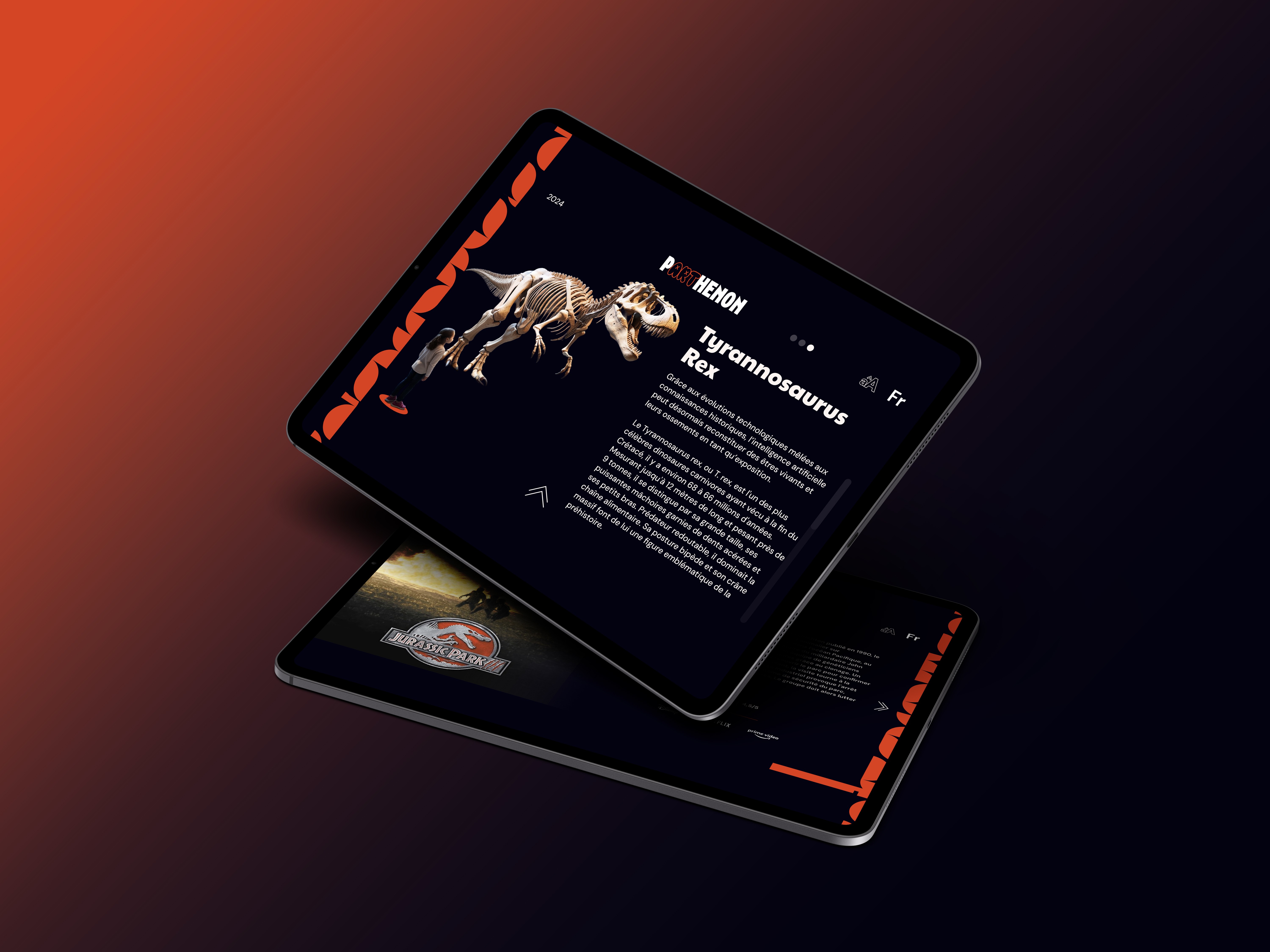
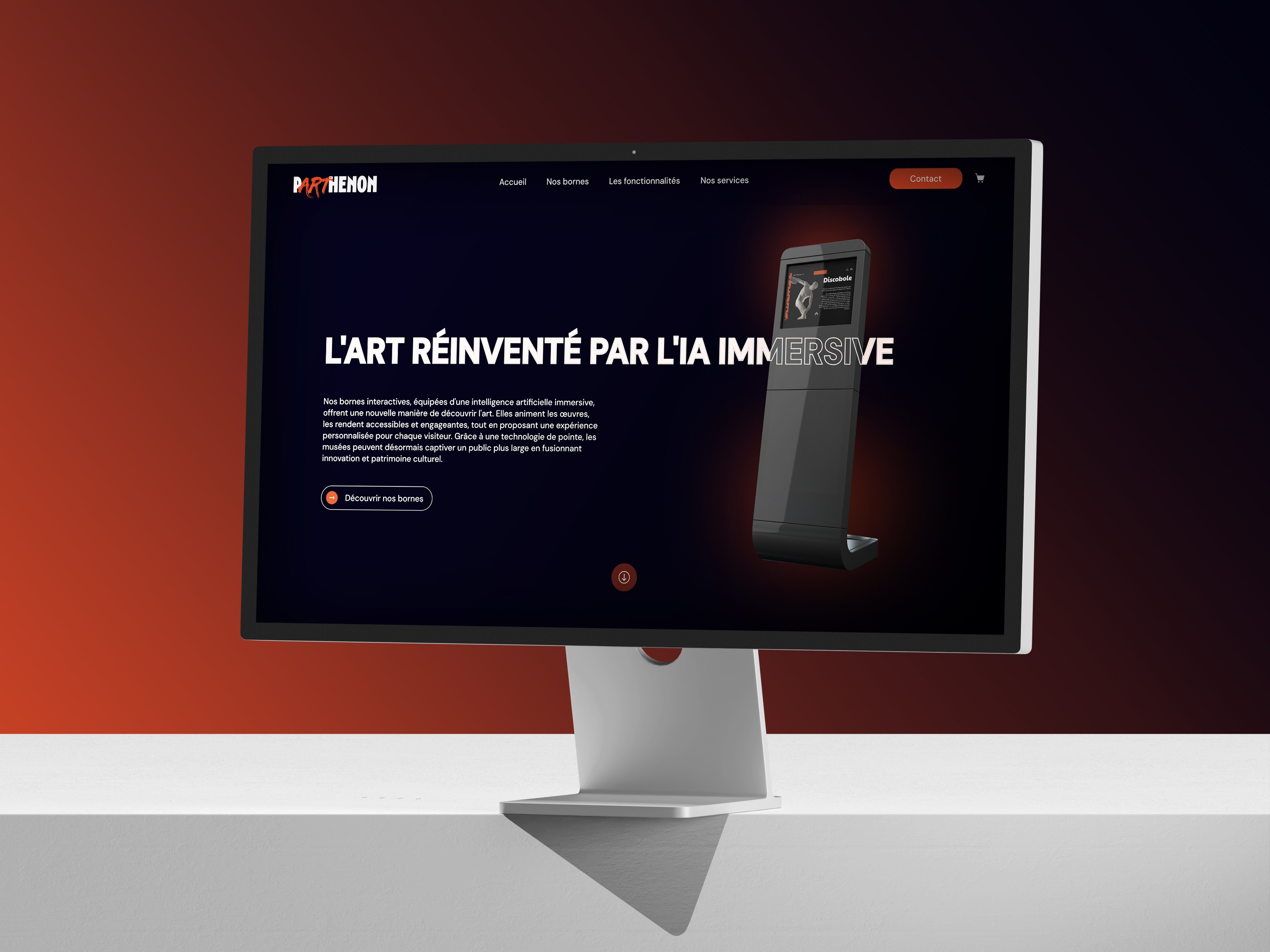
The project was designed around a user-centered approach, taking into account the constraints specific to museums: limited attention span, diverse audiences, the need for an intuitive and robust interface. The UX is based on:
simple, guided navigation,
strong visual emphasis on the works,
immersive but controlled interactions.
The interface and art direction were designed to create an immersive atmosphere while remaining understated and easy to read in a museum environment.
Results & Learning
Parthénon results in a coherent, immersive, and accessible interactive kiosk concept, capable of transforming a museum visit into a more engaging and educational experience. The project demonstrates how AI can be used as a tool for cultural mediation, supporting understanding and the transmission of knowledge.
This project highlights my ability to design complex phygital experiences, combine UX, product design, and technological innovation, and propose solutions tailored to real-world contexts.
Parthénon is fully part of a Product Design & Systems approach, exploring the intersection of content, use, and technology.
Other projects
Parthénon is a UX/UI design project exploring how artificial intelligence can enrich cultural mediation in museums. The project is based on the creation of interactive kiosks, installed near the artworks, allowing visitors to better understand, interpret, and experience history through an immersive experience. The project was carried out as part of a workshop in Bachelor 3 Web Designer, with the aim of proposing an innovative response to real issues of cultural accessibility and audience engagement.
Project overview
Parthenon consists of designing a phygital experience combining digital interface, artificial intelligence, and historical heritage. The kiosks present the works exhibited on screen and use AI to animate, contextualize, and enrich their interpretation.
The goal is to transform a static work into an interactive experience, capable of adapting to different visitor profiles. Through animations, stories, complementary content, and cultural suggestions, Parthenon offers a new way to discover history and art, more engaging and accessible.
The project sits at the intersection of product design, UX, cultural mediation, and technological innovation.
Défis
The main challenge of the project was to make history and art more accessible without distorting them. It was necessary to design an immersive experience capable of capturing attention, while respecting the cultural and educational dimension of the works.
Another important issue involved the diversity of audiences. The kiosks had to be understandable to children as well as adults or older visitors, with appropriate levels of reading and depth, without making the interface more complex.
Finally, the project had to integrate AI in a relevant and measured way, as a tool for understanding and not as a mere visual effect.
Goals
The main objective of Parthénon is to increase understanding of works and historical periods by making their reading more accessible and engaging. The project aims to create an experience that captures attention without replacing the visit, but by enriching it, by offering suitable levels of interpretation and more lively mediation.
Parthénon also seeks to broaden the audience by making the experience relevant for visitors with varied profiles, while integrating AI in a useful, measured way focused on education.
Approach & Key Decisions
The project was designed around a user-centered approach, taking into account the constraints specific to museums: limited attention span, diverse audiences, the need for an intuitive and robust interface. The UX is based on:
simple, guided navigation,
strong visual emphasis on the works,
immersive but controlled interactions.
The interface and art direction were designed to create an immersive atmosphere while remaining understated and easy to read in a museum environment.
Results & Learning
Parthénon results in a coherent, immersive, and accessible interactive kiosk concept, capable of transforming a museum visit into a more engaging and educational experience. The project demonstrates how AI can be used as a tool for cultural mediation, supporting understanding and the transmission of knowledge.
This project highlights my ability to design complex phygital experiences, combine UX, product design, and technological innovation, and propose solutions tailored to real-world contexts.
Parthénon is fully part of a Product Design & Systems approach, exploring the intersection of content, use, and technology.